English
 العربية
 Français
 Deutsch
 Italiano
 Polski
 Português
 Русский
 Español
 Українська


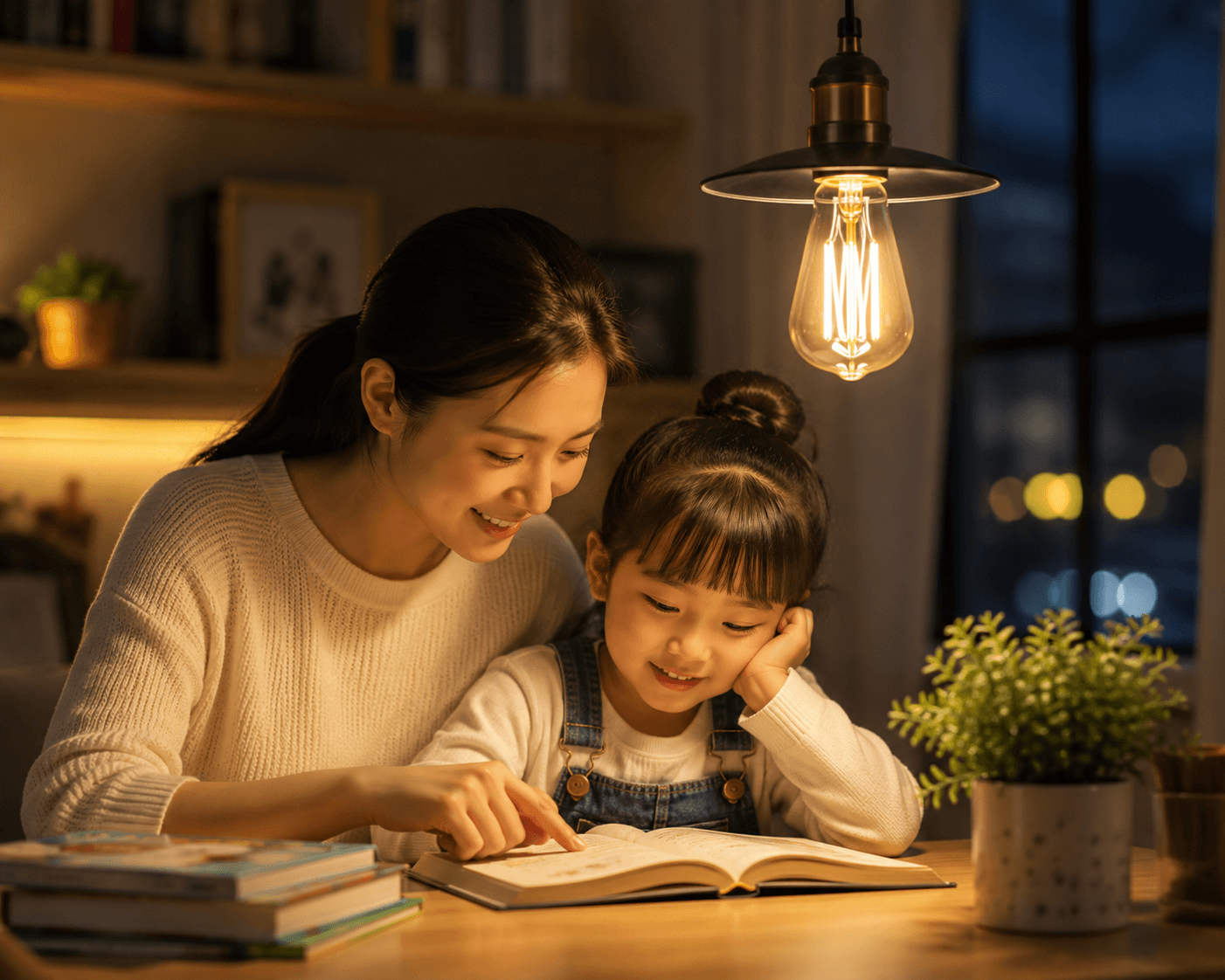
Luz del día vs.. Bombillas de color blanco suave: ¿cuál debería comprar??
Elegir la bombilla adecuada puede cambiar drásticamente el aspecto y la sensación de su hogar. Sin embargo, muchos propietarios todavía luchan con una pregunta común.:
¿Debería elegir una bombilla de luz diurna o una bombilla blanca suave??
Si bien ambas opciones pueden proporcionar una iluminación excelente, Crean atmósferas muy diferentes y sirven para diferentes propósitos.. Comprender las diferencias entre la temperatura del color, brillo, y la reproducción cromática le ayudarán a tomar la mejor decisión para cada habitación de su hogar..
En esta guía, Te explicaremos todo lo que necesitas saber sobre las bombillas LED de luz diurna y de color blanco suave., incluyendo sus diferencias clave, aplicaciones ideales, eficiencia energética, y cómo seleccionar la bombilla perfecta para tus necesidades.
¿Qué bombilla debería comprar? Blanca suave o luz diurna?
Antes de explicar la diferencia, Creo que lo entenderás mejor a través de la siguiente imagen.:
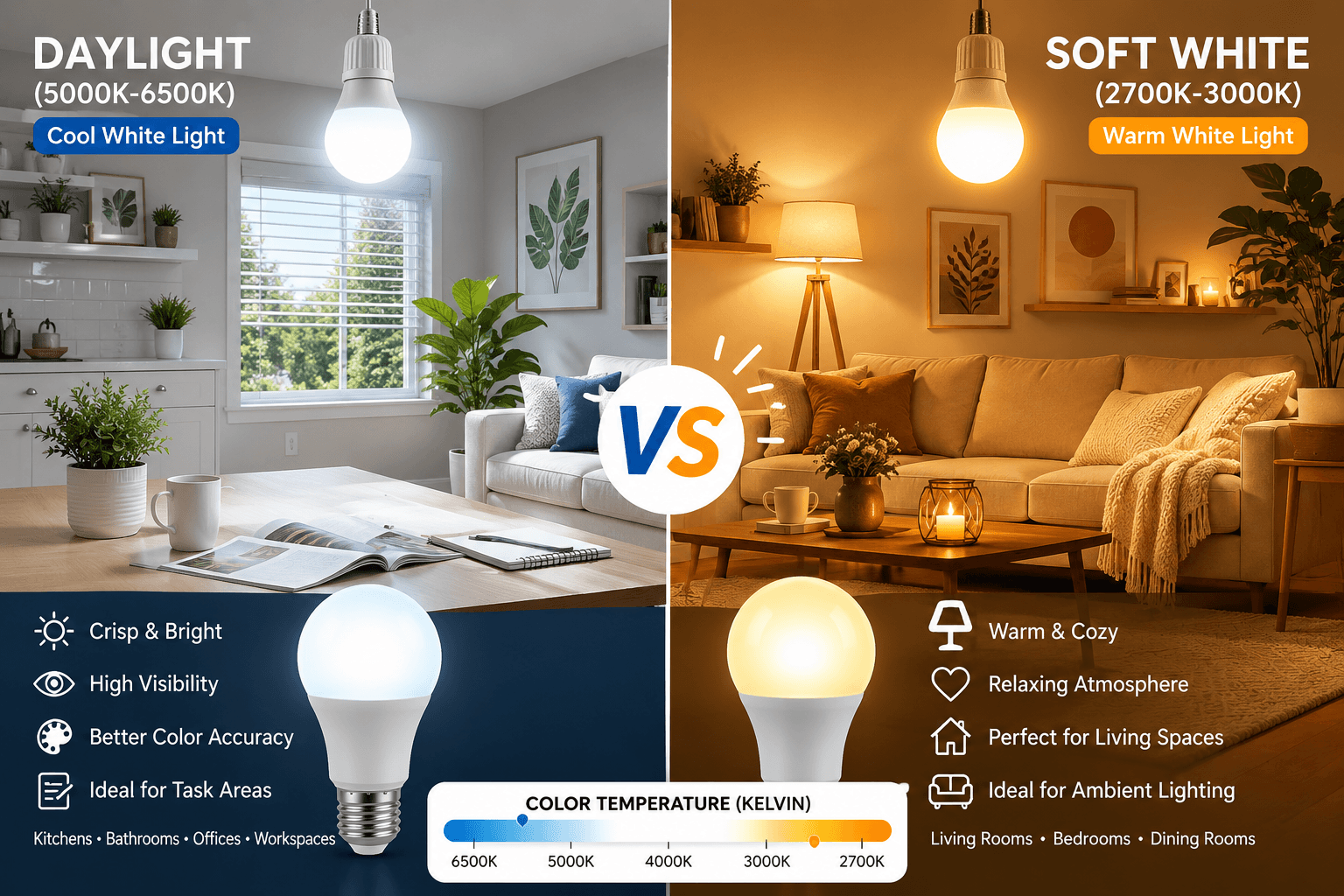
La respuesta depende en gran medida de dónde planeas usar la bombilla y la atmósfera que deseas crear..
Aunque las preferencias personales ciertamente influyen, Algunas pautas sencillas pueden ayudarte a elegir la iluminación adecuada para cada espacio..
Empecemos mirando las bombillas de luz diurna..
Bombillas de luz diurna
En primer lugar, es importante no confundir bombillas de luz diurna con bombillas blancas brillantes. Si bien pueden parecer similares, producen efectos de iluminación notablemente diferentes.
Las bombillas LED de luz diurna están diseñadas para imitar la luz solar natural lo más fielmente posible.. Producen una crujiente, Luz fría que ayuda a revelar los colores con precisión y mejora la visibilidad..
Típicamente, Las bombillas de luz diurna tienen una temperatura de color entre 5000K y 6500K, que se parece mucho a la luz natural.
¿Dónde debería utilizar bombillas de luz diurna??
Porque las bombillas de luz natural mejoran el contraste y la claridad visual, Son ideales para áreas donde se realizan tareas detalladas., como:
- Oficinas en casa
- Salas de estudio
- Lámparas de escritorio
- Baños
- cuartos de lavado
- Talleres
- Garajes
- Cocinas
Por ejemplo, cuando estás leyendo recetas, picar verduras, aplicando maquillaje, o trabajando en manualidades, Las bombillas de luz diurna te ayudan a ver los colores y los detalles con mayor precisión..
Por qué las bombillas de luz diurna son excelentes para la precisión del color
Además de la temperatura del color, otro factor importante es el Índice de reproducción cromática (CRI).
El CRI mide la precisión con la que una fuente de luz revela los colores en comparación con la luz solar natural.
- CRI 80 = Bueno
- CRI 90+ = Excelente
- CRI 95+ = Precisión de color de nivel profesional
Una bombilla de luz diurna con IRC arriba 90 puede hacer comida, ropa, muebles, y la decoración parecen más vibrantes y reales.
Si la percepción precisa del color es importante, Elija siempre una bombilla con una temperatura de color de luz diurna y una clasificación CRI alta.
Ejemplo de brillo
Si está reemplazando una bombilla incandescente tradicional de 60 vatios por una bombilla LED de luz diurna, buscar:
- Consumo de energía: 7–10 vatios
- Brillo: 650–800 lúmenes
Recordar, Los lúmenes, no los vatios, determinan el brillo de la bombilla..
Bombillas LED de color blanco suave.
Mientras que las bombillas de luz diurna se centran en la claridad y la visibilidad, Las bombillas de color blanco suave están diseñadas para crear calidez y comodidad..
Las bombillas LED de color blanco suave emiten una cálida, Brillo acogedor que hace que las habitaciones se sientan acogedoras y relajantes.. Su temperatura de color normalmente cae entre 2700K y 3000K.
¿Dónde debería utilizar bombillas blancas suaves??
Las bombillas de color blanco suave son ideales para espacios donde la comodidad y el ambiente son más importantes que la iluminación de trabajo., incluido:
- salas de estar
- Dormitorios
- Comedores
- Habitaciones familiares
- Pasillos
- Rincones de lectura
Su luz cálida crea una atmósfera acogedora que invita a la relajación y la conversación..
Por esta razón, Muchos propietarios prefieren una iluminación blanca suave en las zonas donde se relajan después de un día ajetreado..
Limitaciones de la iluminación blanca suave
Aunque las bombillas de color blanco suave son excelentes para crear ambiente y comodidad., Es posible que no sean la mejor opción para tareas muy detalladas..
Leer letra pequeña, realizando trabajos de precisión, o identificar diferencias de color sutiles puede ser más difícil bajo una iluminación más cálida.
Ejemplo de brillo
Para reemplazar una bombilla incandescente de 60 vatios, Elija una bombilla LED de color blanco suave con:
- Consumo de energía: 7–10 vatios
- Brillo: 650–800 lúmenes
Al igual que las bombillas de luz diurna, El brillo depende de los lúmenes en lugar de la potencia..
Entendiendo las luces LED
Hoy, Las bombillas LED son la opción de iluminación más popular en todo el mundo, y con razón.
Aunque las LED pueden costar un poco más por adelantado que las bombillas incandescentes tradicionales, ofrecen ahorros sustanciales a largo plazo.
Vida útil más larga
Una bombilla LED de calidad puede durar:
- 15,000–50.000 horas
En comparación con:
- 1,000 horas para bombillas incandescentes
Esto significa menos reemplazos y menores costos de mantenimiento..
Menor consumo de energía
Las bombillas LED consumen mucha menos electricidad.
Por ejemplo:
- 60W Bombilla incandescente = Aproximadamente $13/año
- Bombilla LED equivalente = Aproximadamente $2/año
Como resultado, Muchos propietarios recuperan su inversión inicial dentro del primer año de uso..
Potencia
Antes de que la tecnología LED se generalizara, Los consumidores normalmente juzgan el brillo en función de la potencia..
La suposición común era:
Vatios más altos = luz más brillante
Sin embargo, eso ya no es cierto.
En iluminación moderna, El vataje simplemente indica cuánta energía consume una bombilla, no qué tan brillante es..
Por lo tanto, al comparar bombillas LED, centrarse en los lúmenes en lugar de los vatios.
Lúmenes (Brillo)
Los lúmenes miden la cantidad total de luz visible emitida por una bombilla..
En términos simples:
Más lúmenes = Más brillo
cual es mas brillante: Luz diurna o blanco suave?
Mucha gente asume que las bombillas de luz diurna son automáticamente más brillantes que las bombillas blancas suaves..
En realidad, El brillo depende completamente de la salida de lúmenes..
Por ejemplo:
- bombilla de luz diurna: 800 lúmenes
- Bombilla blanca suave: 800 lúmenes
Ambas bombillas producen el mismo brillo..
Sin embargo, Las bombillas de luz diurna suelen parecer más brillantes porque el ojo humano percibe los colores más fríos como más intensos..
kélvin (Temperatura del color)
La principal diferencia entre las bombillas de luz diurna y las de color blanco suave es su temperatura de color..
La temperatura del color se mide en Kelvin. (K).
Blanco suave
- 2700K–3000K
- Resplandor amarillo cálido
- Ambiente acogedor y relajante.
Luz
- 5000K–6500K
- Luz blanca y azul nítida
- Máxima visibilidad y precisión del color
Tabla de comparación rápida
| Característica | Blanco suave | Luz |
|---|---|---|
| Temperatura del color | 2700K–3000K | 5000K–6500K |
| Apariencia | Amarillo cálido | Blanco fresco |
| Mejor para | Dormitorios, Salas de estar, Comedores | Cocinas, Baños, Oficinas |
| Ánimo | Relajante & Acogedor | Brillante & Energizante |
| Precisión del color | Bien | Excelente |
| IRC recomendado | 90+ | 90+ |
Conclusión
Elegir entre bombillas de luz diurna y bombillas blancas suaves no se trata de decidir cuál es mejor, sino de seleccionar la iluminación adecuada para el entorno adecuado..
Si quieres un calentito, ambiente confortable para relajarse y entretener a los invitados, elegir bombillas LED de color blanco suave (2700K–3000K).
Si necesitas máxima visibilidad, colores precisos, y mejor iluminación para tareas, elegir bombillas LED de luz diurna (5000K–6500K).
Independientemente de la temperatura del color, Recomendamos encarecidamente seleccionar bombillas con IRC de 90 o superior. Las bombillas con alto CRI hacen que los colores parezcan más naturales, vibrante, y más cerca de lo que verías bajo la luz solar natural.
En Iluminación Huiyee, Nuestras bombillas LED estándar se fabrican con CRI 90+, ayudando a los propietarios, minoristas, y distribuidores de iluminación ofrecen una calidad de iluminación superior y una mejor experiencia visual.
Preguntas frecuentes
¿Es el blanco suave lo mismo que el blanco cálido??
No exactamente.
Aunque los términos a menudo se usan indistintamente, hay una ligera diferencia.
- Blanco suave: 2700K–3000K
- Blanco cálido: 3000K–4000K
Las bombillas de color blanco cálido parecen ligeramente más blancas y menos amarillas que las bombillas de color blanco suave..
cual es mejor: Blanco suave o luz diurna?
Ninguno de los dos es universalmente mejor.
La mejor elección depende de su aplicación..
Elegir:
- Blanco suave para comodidad y relajación.
- Luz natural para visibilidad y actividades orientadas a tareas..
¿Son iguales las bombillas de luz diurna y las de color blanco brillante??
No.
Las bombillas blancas brillantes suelen estar entre:
- 3500K–4500K
Esto las convierte en un término medio entre las bombillas blancas suaves y las de luz diurna..
Muchos propietarios prefieren la iluminación blanca brillante para las cocinas porque ofrece una apariencia más limpia sin el tono azulado de las bombillas de luz diurna..
¿Debo usar bombillas de luz diurna o de color blanco suave en la cocina??
Para la mayoría de las cocinas, Las bombillas de luz diurna son la mejor opción porque mejoran la visibilidad y facilitan la preparación de alimentos..
Sin embargo, si la luz del día se siente demasiado fría o azul, una bombilla blanca brillante de alrededor de 4000 K puede proporcionar un excelente compromiso.
Buscando bombillas LED de alta calidad?
Nuestra fábrica fabrica una amplia gama de productos de iluminación LED para satisfacer diferentes necesidades de iluminación residencial y comercial..
Ofrecemos:
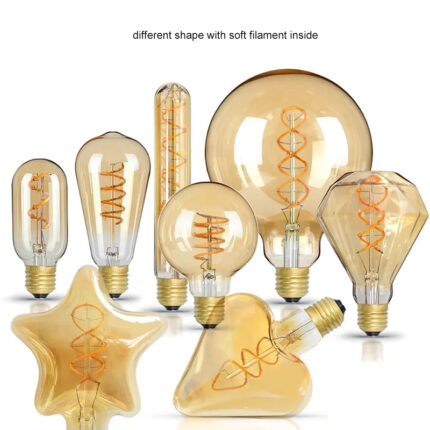
- Bombillas de filamentos LED
- Bombillas LED A19/60
- E26 & Bombillas LED E27
- Bombillas LED tipo vela
- Bombillas Edison
- Bombillas de globo
- Bombillas LED de tubo
- Bombillas LED decorativas
- Bombillas decorativas de gran tamaño.
- Bombillas LED regulables
- Bombillas LED inteligentes
- OEM personalizado & Soluciones de iluminación ODM
Haga clic aquí para más artículos
Además de nuestra gama de productos estándar, Muchas bombillas decorativas se pueden personalizar según sus requisitos específicos., incluyendo la forma, potencia, temperatura de color, CRI, embalaje, herrada, y necesidades de certificación.
Si eres mayorista de iluminación, distribuidor, detallista, Vendedores de Amazon, contratista del proyecto, o propietario de la marca, Podemos ayudarle a hacer realidad sus ideas de iluminación..
Para más opciones de bombillas LED, por favor visite nuestro sitio web. Si tienes alguna pregunta, requisitos personalizados, o necesidades de abastecimiento, siéntete libre de contacta con nuestro equipo directamente. Siempre estaremos encantados de ayudarle a encontrar la solución de iluminación perfecta..
Artículos relacionados